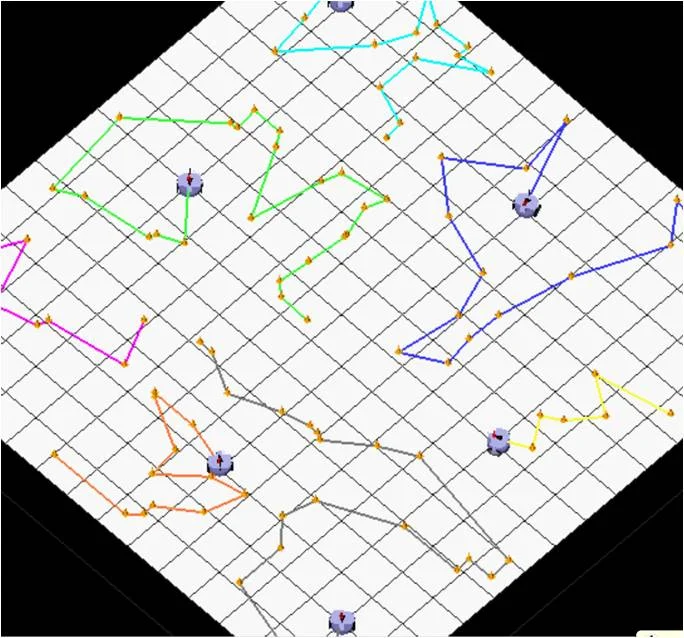
As robots continue advancing and permeating our world, the frequency of interactions between robots that do not share a common goal will increase. Each robot in the world will likely have a different fitness function to optimize due to each robot having independent goals and owners. Such collections of robots, termed a Multi-Robot Community (MRC), generally, have no shared global fitness function to maximize. This is in contrast to most Multi-Robot Systems (MRSs), which are designed to cooperate to accomplish common goals and hence have a shared global fitness function. A MRC may contain individual robots, MRSs, or a combination. To establish cooperative task allocation in MRCs, a new task allocation framework is required.
We developed an incentive-reward framework to encourage collaboration via altruism while protecting against selfishness. Three altruistic controllers have been developed that model the reciprocating altruistic relationships.